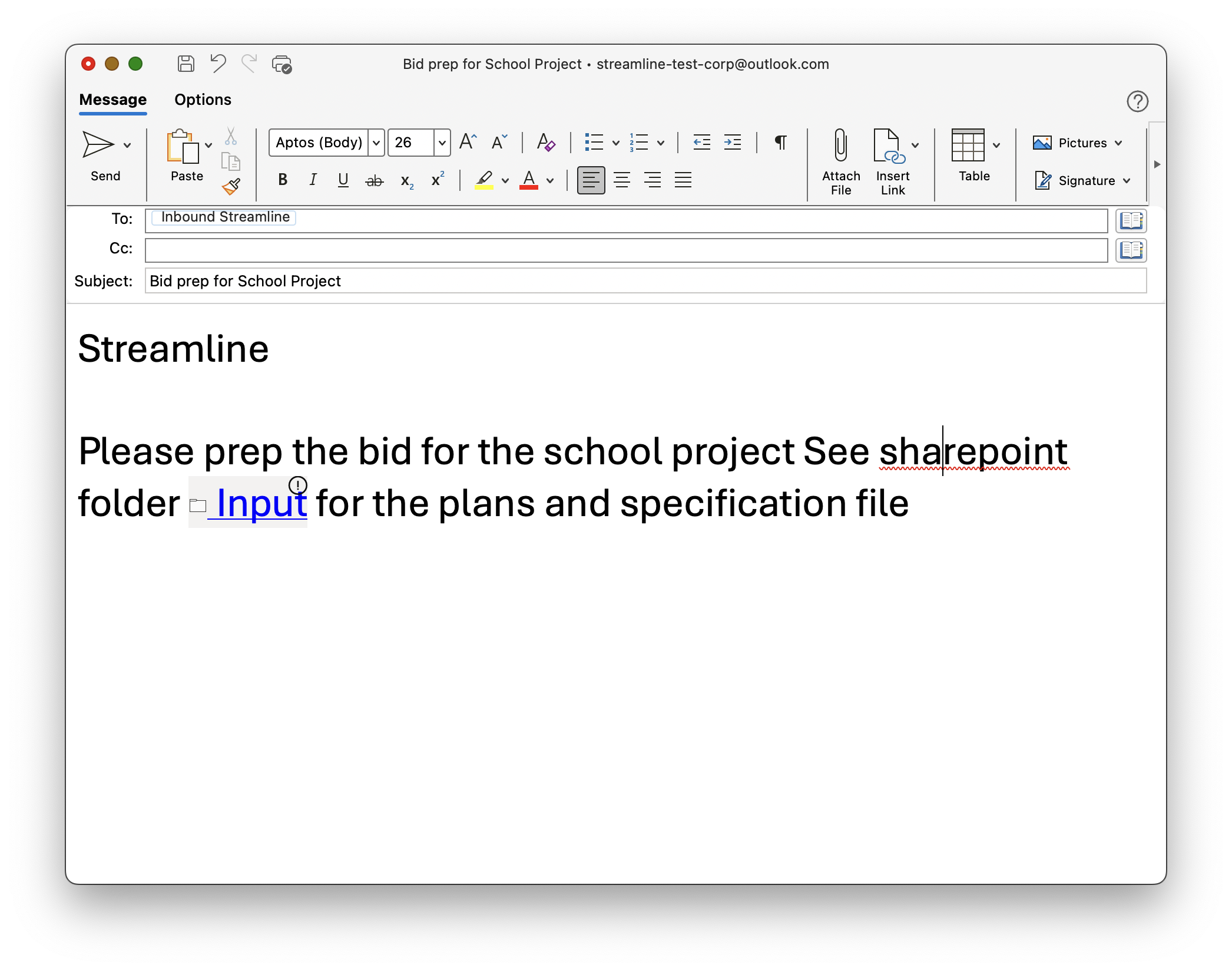
Email us your plans and specs
Forward the bid set the way you'd send it to a coworker. No new software, no new login.
AI Takeoff
Bid more. Drive revenue. Same headcount.
Streamline cuts bid prep from 6 hours to 15 minutes. Email plans and specs and get back marked-up Bluebeam plans and an estimating workbook with your door schedule, hardware sets, and product requirements. Your team just reviews.
| Mark | Type | Size | Hardware Set |
|---|---|---|---|
| 101 | Aluminum storefront, single | 3'-0" x 7'-0" | HW-1 |
| 102 | Aluminum storefront, pair | 6'-0" x 7'-0" | HW-2 |
| 103 | Hollow metal, 20 min | 3'-0" x 7'-0" | HW-3 |
| 104 | Glass entrance, single | 3'-6" x 8'-0" | HW-4 |
If your team estimates glazing and curtain wall work, bid doc prep is costing you speed, deadlines, and bids won — and it has nothing to do with how good your estimators are.
Before anyone can price a job, someone has to walk the elevations, cross-reference the Division 8 spec, build the door schedule, and match each door to its hardware set. That work consumes the estimator before the estimate even starts.
Division 8 specs bury substitution restrictions, PE submittal requirements, warranty terms, and standards across hundreds of pages. Miss one and you're pricing a system the architect won't approve — or catching it after the bid is submitted.
Manual prep doesn't compress, no matter how experienced your estimators are. When three bid sets land the same week, one gets rushed or passed on. Those are invisible losses that compound over a quarter.
The person who can catch a spec conflict and price a complex curtain wall system correctly is also the one building door schedules and cross-referencing hardware sets and product specs against the elevations. That's where the day goes, before the expertise even kicks in.
Send us the plans. Get a head start on the bid. Here's what happens.
Forward the bid set the way you'd send it to a coworker. No new software, no new login.
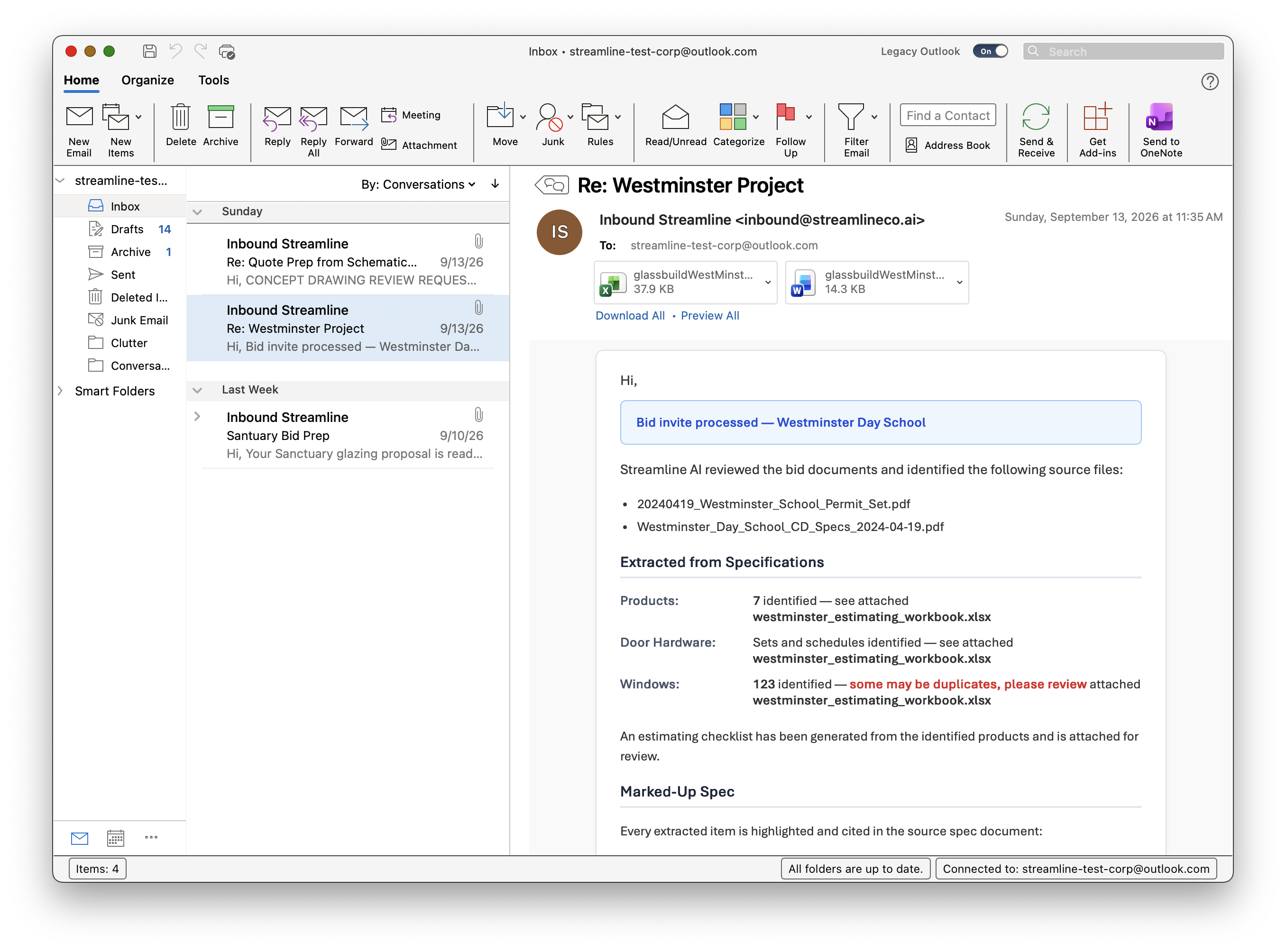
Marked-up plans ready for Bluebeam, plus a draft estimating workbook with your door schedule, hardware sets, and product requirements pulled from the spec. Start pricing immediately — not after a day of takeoffs.
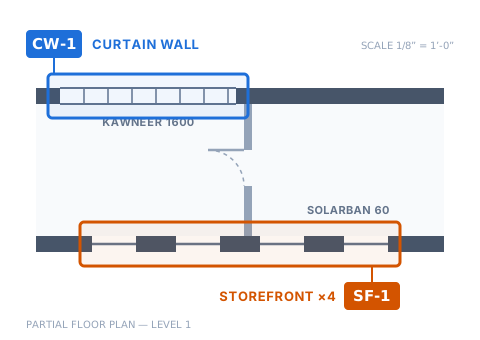
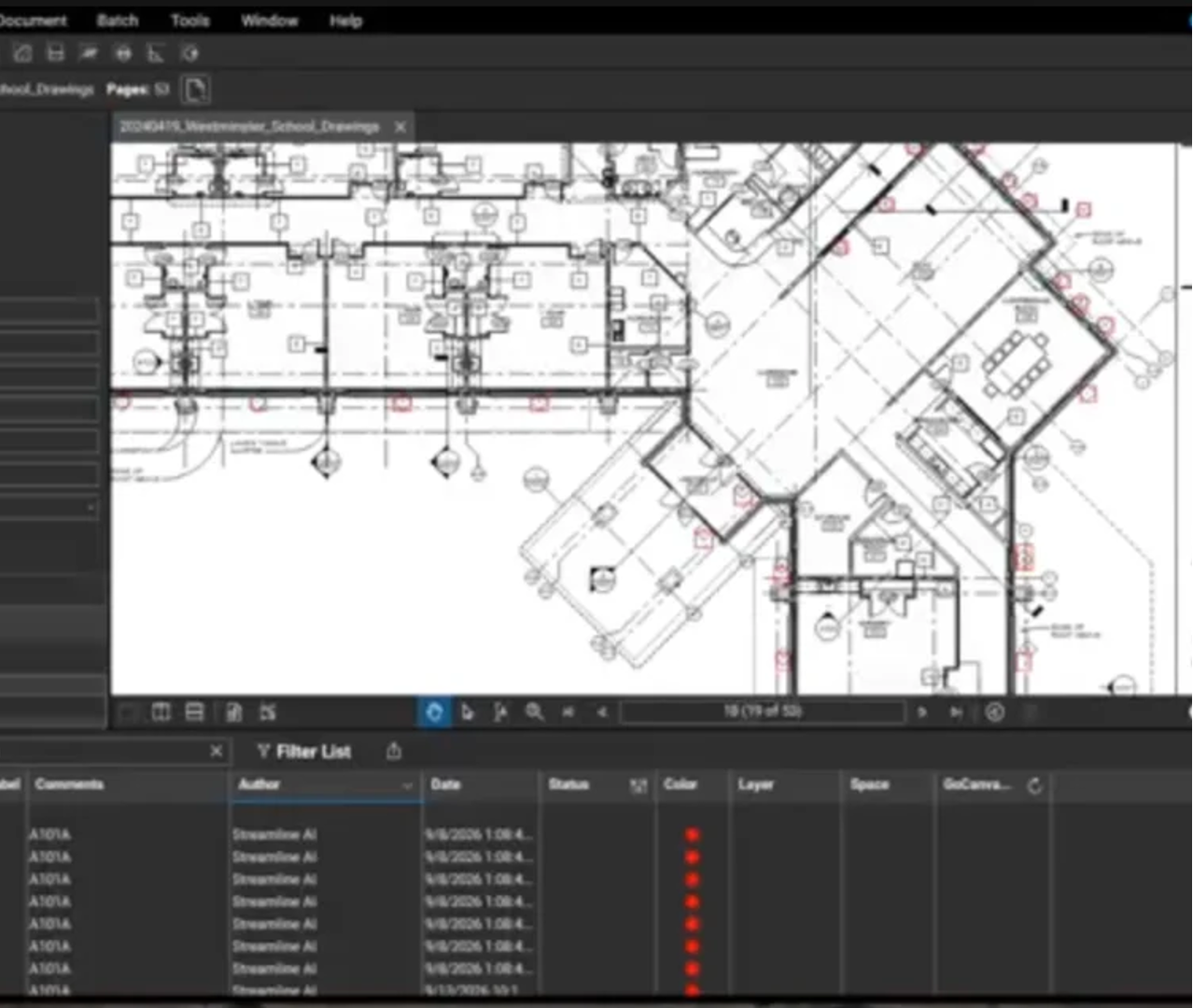
Storefronts, curtain wall, and windows called out right on the drawings. Open in Bluebeam and verify at a glance — nothing goes out the door unchecked.
Everything we found is already in your workbook. Check it against the drawings, drop in your numbers, and the bid's out — same judgment, a fraction of the hours.
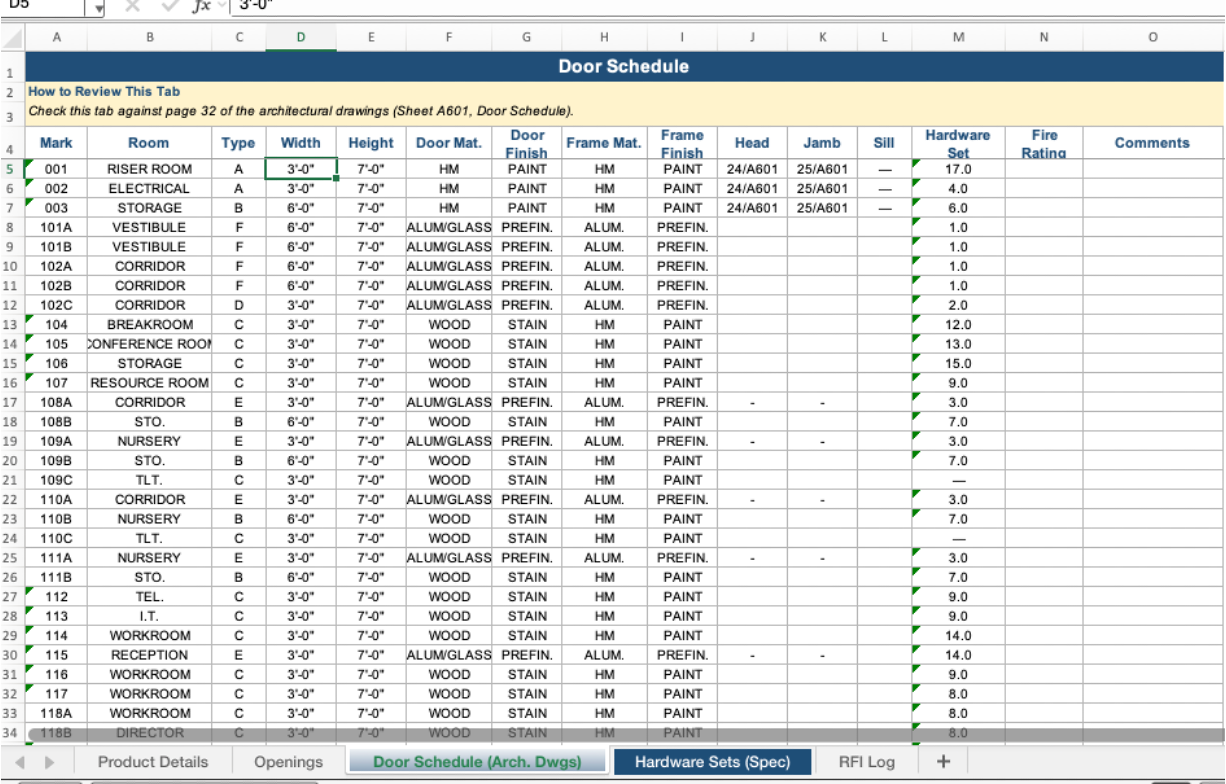
Door Schedules
Every door: mark, room, type, size, material, finish, fire rating, and hardware set.
Hardware Sets
Each set itemized with model numbers and quantities, matched to the doors that use it.
Product Details
Basis of design, approved equals, PE submittals, warranties, and standards, cited to the spec page.
Book a 15-minute demo and we'll show you what your next spec looks like prepped and ready to quote.
The same bottleneck shows up at different points in the bid workflow. Here's what it looks like in practice.
A plan set and Division 8 spec land. Before anyone can price, someone reads the elevations, cross-references the spec, builds the door schedule, and matches each door to its hardware set. On a 200-page bid set, bid prep can run six hours before pricing even begins.
The result
Your estimator opens structured bid docs instead of a blank sheet. The prep is done. They review, price, and submit.
Average time from plan + spec to prepped bid docs — no manual markup.
Streamline has been live with glazing estimators at GlassBuild 2026, reading the same plans and Division 8 specs your team works from every day.
Implementation is handled by our team, not yours. We learn your systems, your bid doc templates, and how your architects write specs.
You don't configure Streamline yourself. Our team learns how your estimators work, maps your spec formats, and builds the integration. No internal IT project, no months of setup.
Streamline is trained on your product line, your bid doc templates, and the Division 8 formats your architects actually use. What's relevant to a curtain wall bid looks nothing like a storefront job — and it won't treat them the same.
Your estimators don't change their workflow. Plans still arrive the same way. Bids still go out the same way. Streamline handles the markup in between.
Deploy on your infrastructure — on-prem, private cloud, or your VPC. Your bid documents, your pricing, your customer data — none of it leaves your environment.
Book a 15-minute demo and we'll show you what your next spec looks like prepped and ready to quote.